
Minimalism. You’ve heard the word, maybe even seen the perfectly curated photos on social media. But what is minimalism really? Is it just about owning white furniture and only wearing black? Actually, no. It’s much more than that.
Minimalism is a thoughtful and intentional approach to life, where you consciously choose to surround yourself only with what adds value. This simple guide explores the minimalist lifestyle, unpacks the true meaning of minimalism, and provides a practical pathway for anyone ready to simplify their life. Consider this your complete, beginner-friendly roadmap to a more intentional existence.
At its heart, minimalism is about intentionally promoting the things we most value and removing everything that distracts us from them. It’s a lifestyle that can help you find freedom: freedom from fear, freedom from worry, freedom from overwhelm, and freedom from the pressures of consumer culture. In today’s fast-paced world, the meaning of minimalism resonates deeply as a counter-movement — a conscious decision to reclaim our time, energy, and focus.
What Is Minimalism? (Simple Definition)
The meaning of minimalism extends far beyond simply getting rid of possessions. It is a deliberate choice to live with less, not as a form of deprivation, but as a pathway to greater freedom. Minimalism is about curating your life, your belongings, and your experiences so they reflect your values and priorities.
More than decluttering, minimalism is about mindful acquisition. A minimalist lifestyle is not about having nothing; it’s about having exactly what you need and what genuinely brings you joy. This definition is deeply personal and varies from one person to another. What feels essential to one individual may feel unnecessary to someone else.

At its core, minimalism is guided by a few key principles:
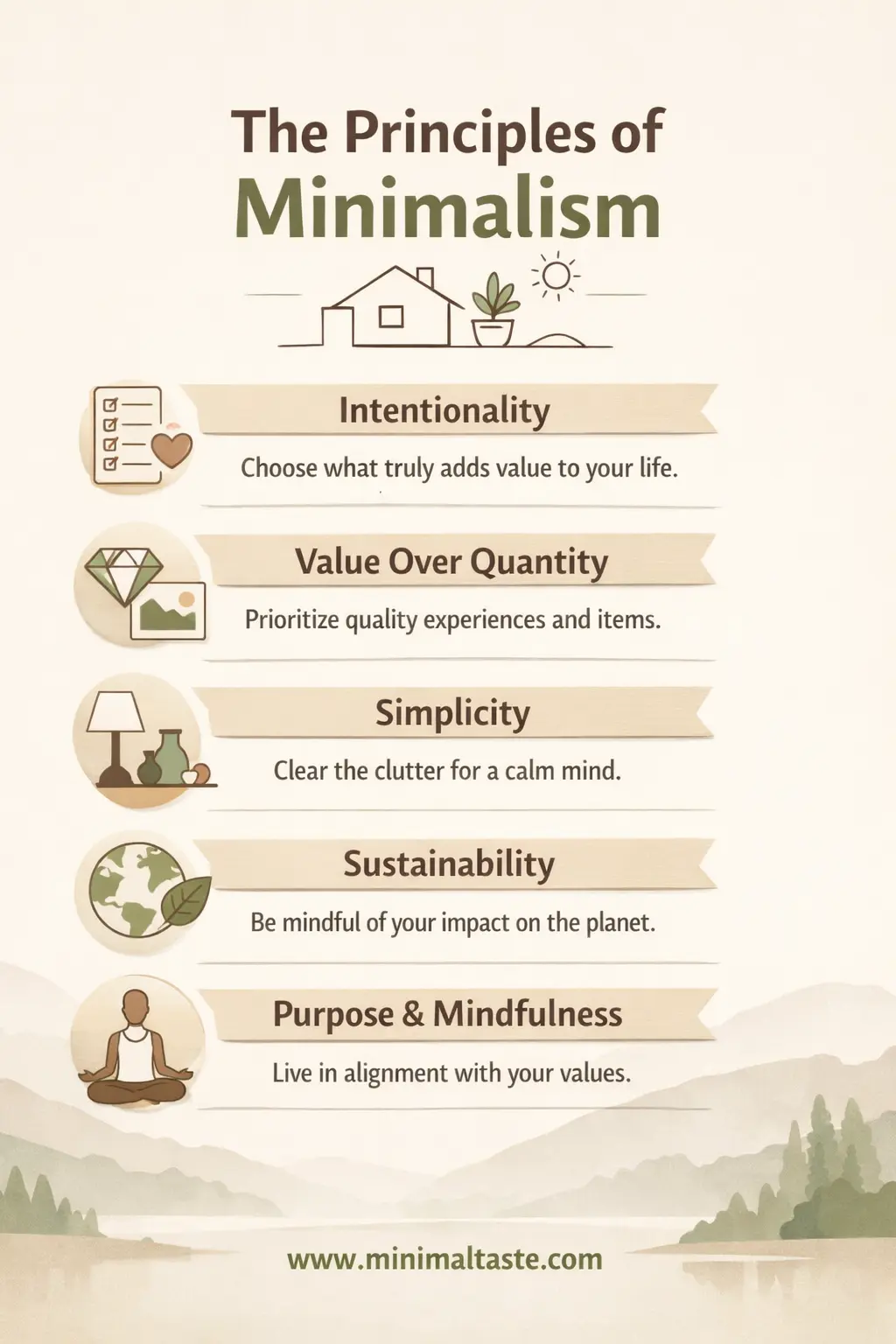
- Intentionality: Every possession and commitment is carefully considered. You ask yourself whether something truly adds value to your life.
- Value-driven living: The focus shifts from acquiring more to experiencing more of what you truly love.
- Freedom: Minimalism frees you from the cycle of consumerism and allows you to invest your time, money, and energy in what matters most.
- Purpose: It encourages you to define your purpose and live in alignment with it.
- Mindfulness: Minimalism cultivates awareness around consumption habits and their impact on both personal well-being and the environment.
The Core Principles of Minimalism
While the definition explains what minimalism is, these principles show how it works in everyday life:
- Quality over quantity: Choosing fewer, higher-quality items that last longer and serve you better.
- Functionality: Prioritizing items that are useful and enhance daily life.
- Sustainability: Being mindful of environmental impact and choosing ethical, long-lasting products.
- Experiences over possessions: Valuing memories, growth, and connection more than material accumulation.
- Less clutter, more space: Creating physical simplicity to support mental clarity and calm.
Common Myths About Minimalism
Minimalism is often misunderstood, especially when filtered through curated online aesthetics. Let’s clear up some common misconceptions:
- Minimalism is about deprivation: It’s about intentionality, not denial.
- Minimalism has a specific aesthetic: While some minimalist spaces look modern and neutral, style is personal and secondary.
- Minimalists never buy anything new: The goal is mindful consumption, not complete abstinence.
- Minimalism is the same as decluttering: Decluttering is a starting point, not the destination.
- You have to get rid of everything: Minimalism isn’t a competition. It’s about keeping what you use, need, and love.
What Minimalism Is Not ?
To fully understand what is minimalism, it helps to define what it isn’t. Minimalism is not:
- A trend or short-term challenge
- A competition about owning the least
- A one-size-fits-all system
- A way to impress others
- A sacrifice or punishment
Minimalism is a personal, evolving lifestyle rooted in intention, not restriction.
Minimalism in Everyday Life
Minimalist living becomes powerful when applied to daily routines and choices. Here’s how it can show up in different areas of life:
Minimalism at Home
Reduce clutter by regularly letting go of items that no longer serve you. Keep what is useful, beautiful, or meaningful, and organize your space to support calm and clarity.
Minimalism in Fashion
A minimalist wardrobe often includes versatile, high-quality pieces you genuinely enjoy wearing. This reduces decision fatigue and closet clutter while improving personal style.
Digital Minimalism
Limit digital distractions by unsubscribing from unnecessary emails, reducing social media use, and using technology with intention rather than habit.
Minimalism and Finances
Minimalism encourages mindful spending. Fewer impulse purchases often lead to greater savings, reduced stress, and stronger alignment with personal priorities.
Minimalism in Relationships
Minimalist living also applies to emotional space. Cultivate meaningful relationships and gently step away from connections that drain your energy.
Food
Shop intentionally, plan meals, and focus on nourishing, simple foods. Mindful eating aligns naturally with minimalist values.
Time
Prioritize activities that bring fulfillment and learn to say no to commitments that don’t align with your values. Many people pair minimalism with slow living to protect their time and energy.
Emotional, Mental, and Lifestyle Benefits of Minimalism
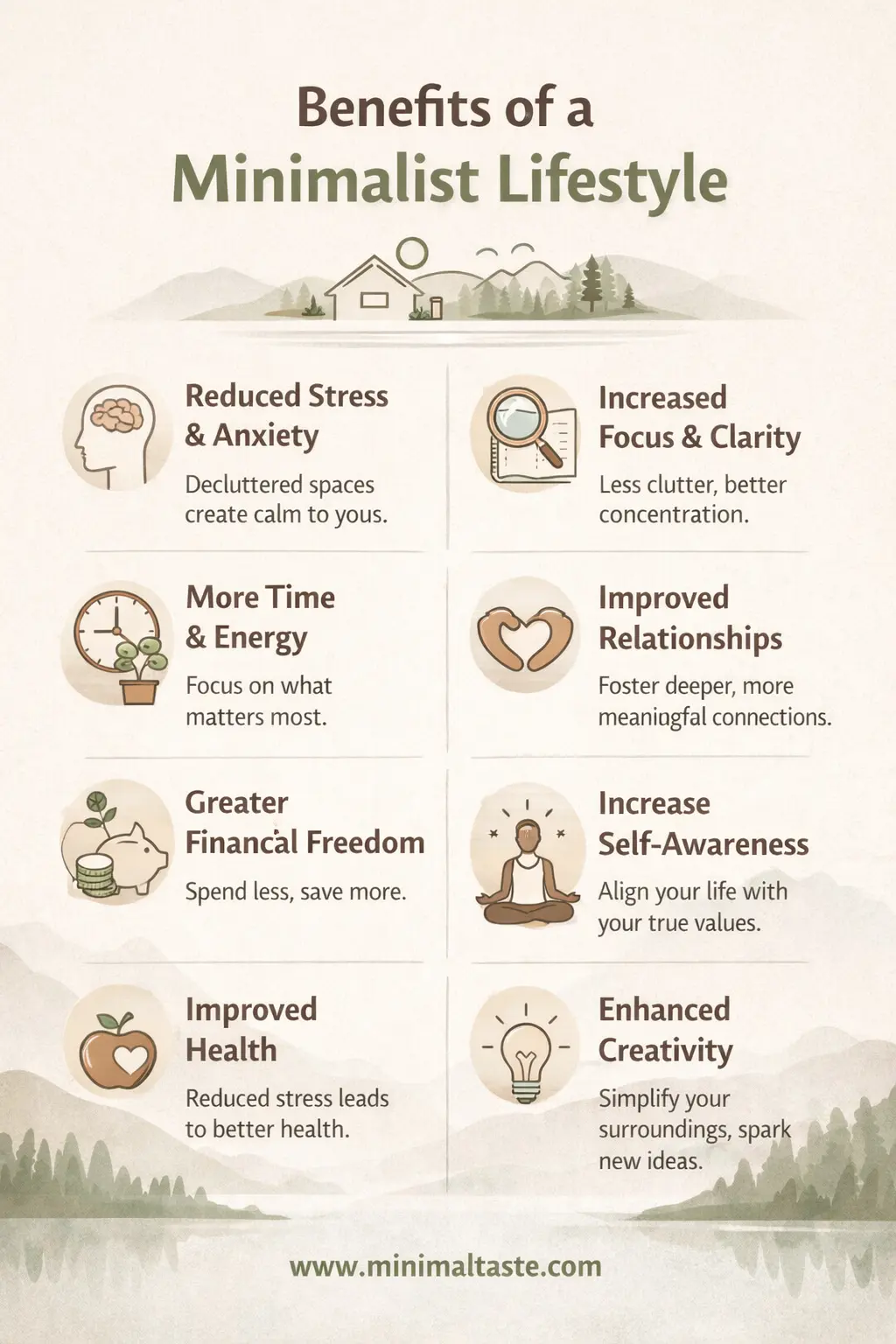
The benefits of a minimalist lifestyle extend far beyond a tidy home. Many people experience:
- Reduced stress and anxiety
- Greater focus and mental clarity
- Improved relationships
- More time and energy for meaningful pursuits
- Increased financial freedom
- Greater self-awareness and confidence
- Enhanced creativity
- Improved overall well-being
By removing excess, minimalism creates space for what truly matters.
How to Start Living a Minimalist Life ?
Start With One Small Area
Starting a minimalist lifestyle doesn’t require a dramatic overhaul. Begin small by decluttering one drawer, one shelf, or one corner of your home.
Simplify Your Daily Habits
Unsubscribe from unnecessary emails, reduce digital clutter, and create a simple daily routine that supports calm and focus.
Focus on Progress, Not Perfection
Minimalism is not about perfection. It’s about progress, intention, and making choices that align with what truly matters to you.
Conclusion
Ultimately, what is minimalism is a personal and evolving journey. A minimalist lifestyle isn’t about striving for perfection or living with nothing; it’s about creating a life that feels meaningful, intentional, and aligned with your values.
By embracing the meaning of minimalism, you choose experiences over possessions, freedom over accumulation, and purpose over pressure. Minimalism is not restrictive — it is liberating. It is a path toward intentional living, clarity, and lasting fulfillment.
Frequently Asked Questions About Minimalism
Is minimalism about owning nothing?
No, minimalism is not about getting rid of everything you own. It’s about being intentional with your possessions and keeping what truly adds value to your life. A minimalist home can still feel warm, personal, and comfortable.
Can minimalism help you save money?
Yes, many people find that minimalism naturally leads to spending less. By focusing on needs rather than impulse purchases, you become more mindful of where your money goes. Over time, this can reduce financial stress and support long-term goals.
Is minimalism suitable for families?
Absolutely. Minimalism can be adapted to any lifestyle, including families with children. It’s not about strict rules, but about creating systems that make daily life simpler, calmer, and more meaningful for everyone.
How long does it take to become a minimalist?
There’s no fixed timeline. Minimalism is a gradual process that evolves over time. Small, consistent changes are often more sustainable than drastic ones, allowing you to build habits that truly last.